MEMORIAL GUIDANCE
How to Choose a Photograph for a Carved Memorial
A familiar expression is a good place to start. Here’s how to choose a meaningful photograph and understand what it can bring to a hardwood memorial.
You may already know the photograph: the smile at the kitchen table, the look beneath a favorite hat, or a quiet moment that feels unmistakably like them. When you are choosing an image for a memorial, that recognition matters.
For a carved portrait, the most useful starting point is a photograph that combines that familiar expression with clearly visible features. It does not have to be a formal portrait, and it does not have to be the most recent picture. Start with a few images you love, then consider the details below.
1. Choose the expression you want to remember
Ask yourself, “Does this feel like the person I knew?” A natural smile may be right for one family; a thoughtful expression may be right for another. There is no requirement to choose a posed photograph or a particular stage of someone’s life.
If relatives have different favorites, choose a lead image and explain why it matters. Keep the alternatives as references. A short note such as “Please keep this smile and these glasses” can communicate more than a folder of unexplained pictures.
2. Look closely at the face
Open the original image and zoom in enough to inspect the eyes, nose, mouth, and outline of the face. You are looking for usable information, rather than a photograph that only appears sharp as a small thumbnail.
- Focus: Can you distinguish the eyes and the shape of the mouth?
- Light: Are facial features visible without deep shadows or bright glare hiding them?
- Size in the picture: Does the person fill a useful part of the frame, or are they a tiny face in a large group?
- Obstructions: Do a hand, reflection, hat brim, or another person cover an important detail?
Glasses, hats, and other familiar details can belong in the design. The question is whether the photograph shows enough of the person to interpret those details faithfully. If your favorite has a limitation, keep it in the selection and include another view if you have one.
3. Send the original file when you can
The original camera or phone file usually gives a designer more to work with than a screenshot or a small image copied from social media. Ask the person who took the photo whether they still have the original, and keep an untouched copy before making edits.
Simply enlarging a file does not prove that it contains more authentic detail. Adobe explains that upsampling adds pixels by estimating what belongs between existing ones. Changing a print-resolution setting without resampling does not add image data. That is why a “300 DPI” label alone cannot tell us whether a face is clear enough. Adobe’s guide to image size and resampling explains the distinction.
Leave heavy sharpening, beauty filters, background removal, and AI restoration until the original has been reviewed. If you already have an edited version you like, provide both versions and identify the changes you want to keep.
4. An older print can still be a starting point
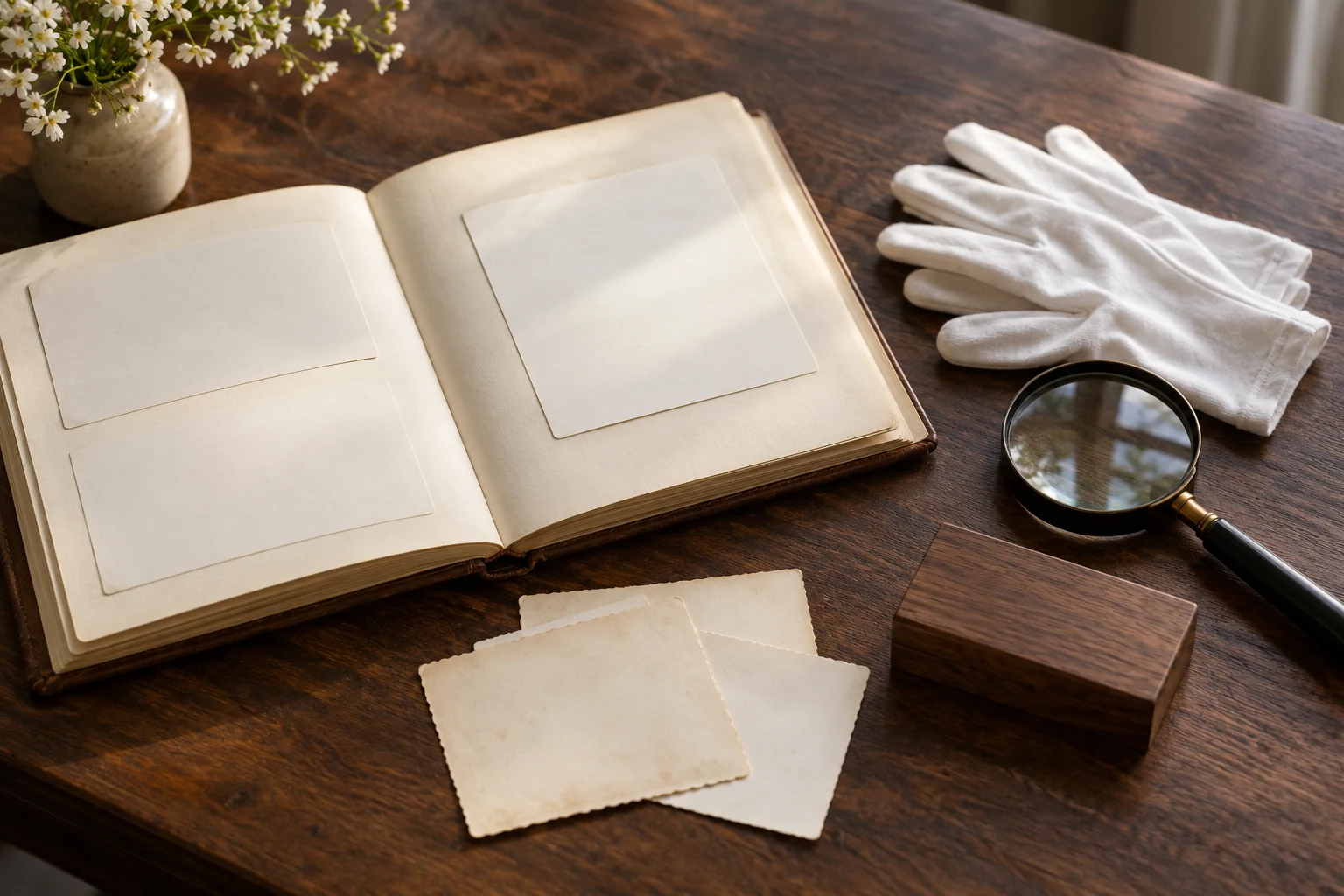
If your favorite exists only as a printed photograph, consider a careful scan that includes the whole image. If you are photographing the print, keep the camera parallel to it and use even light without reflections. Check the result closely before putting the original away.
Do not risk damaging a fragile or firmly mounted photograph to remove it from an album. Ask a photo-preservation professional about delicate originals. Keep an unedited digital copy and use a separate copy for any cleanup.
The Library of Congress recommends retaining the highest-quality version of an important photo, using descriptive names, and keeping copies in different places. Those habits also make it easier to find the right reference later. See its guidance on preserving digital photographs.
A black-and-white photograph is worth considering. So is a faded image that holds special meaning. Suitability depends on the detail that remains and the intended design; restoration should not be treated as a guarantee that missing features can be recovered accurately.
5. Explain what should stay in the design
A photograph and a carved relief are different forms of an image. A relief represents shapes at different depths in wood, so the portrait, background, lettering, and meaningful objects need to work together as a composition.
As an example of that distinction, Vectric’s documentation explains that a component created from a bitmap typically needs adjustments to its height, size, position, or how it combines with other components. A photo conversion is a starting point for modeling. Read Vectric’s component-creation guidance.
Tell the designer whether a place, uniform, pet, tool, or other detail is important—and which background elements can be left out. Send the uncropped source when possible. A group photo may be useful if the chosen person is clear and unobstructed, but extracting a small or partly hidden face can limit the result.
6. Review the likeness before approving the proof
Storied Memorials’ planned human hardwood memorial collection includes photograph preparation, custom artwork, and a digital proof before production. The design and production process places family approval before carving.
When reviewing a proof, check more than the overall appearance. Look at the expression, glasses, hairline, facial hair, and any detail that makes the portrait recognizable to you. Confirm the exact spelling of names, every date, the wording, and what has been included or removed.
Ask what the proof represents: the layout, the proposed relief, or both. A flat artwork preview does not show every aspect of carved depth, and a screen image cannot reproduce the exact grain and color of the finished wood. Clarify uncertain details and the agreed revision terms before approving.
Begin with the photograph that matters to you
Tell us who you want to remember and what you hope to preserve. Storied Memorials is preparing for launch; design suitability, availability, and final terms are confirmed before an order is accepted.
Start a design requestPhoto-selection guidance by Storied Memorials, with linked technical references from Adobe, Vectric, and the Library of Congress. Sources checked September 13, 2026.